Loading...
Serving Burlington, VT and surrounding areas. (802) 307-1480
Vermont winters push moisture into your crawl space and basement every season. We install vapor barriers in Burlington that block ground moisture at the source and protect your floors, framing, and heating costs long-term.
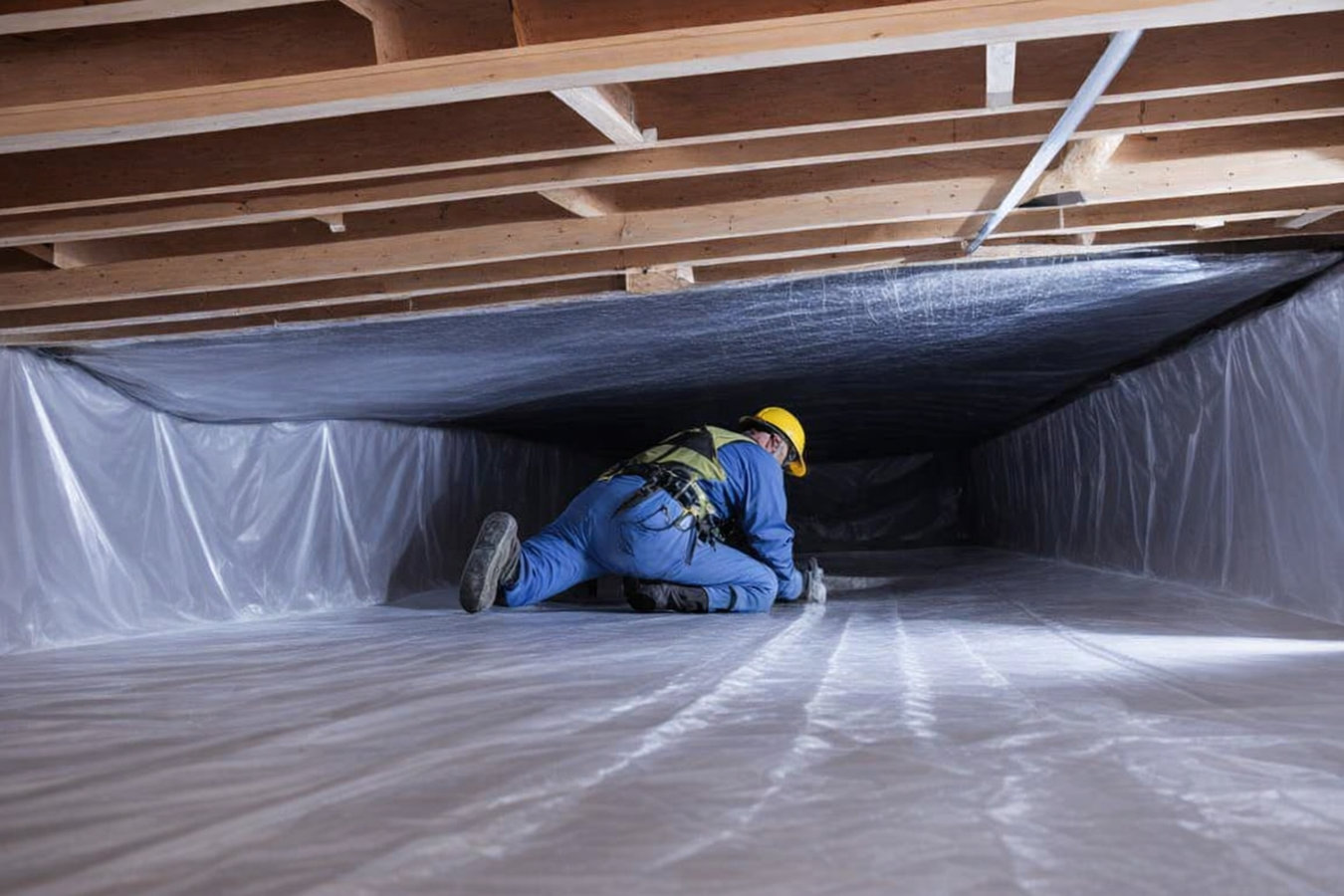
Vapor barrier installation in Burlington places a durable plastic sheet across your crawl space floor and lower walls - or basement floor - to stop ground moisture from rising into your home's structure. Most jobs take a single day, and you do not need to leave your home while the crew works.
Burlington's freeze-thaw cycles run from November through March. Repeated freezing and thawing pushes water into the soil around your foundation and underneath your home. Without a barrier, that moisture travels upward into your floor joists, subfloor, and insulation. The result is a musty smell each spring, wood that softens over years, and a home that is expensive to heat because damp air holds cold. Many Burlington homes built before 1950 have stone or brick foundations with no original moisture protection at all - which means decades of exposure to Vermont winters may already be visible in your framing.
For many homeowners, vapor barrier installation works in combination with attic air sealing as part of a complete weatherization project - addressing moisture from below and air leakage from above in the same season.
If you notice a damp, earthy smell in your basement or on your first floor - particularly in the spring after snowmelt - that is often a sign that ground moisture is moving up through your crawl space. Burlington's freeze-thaw cycles push a lot of water into the soil around foundations, and without a barrier, that moisture has a direct path into your home. The smell usually gets worse in late March and April when the ground is saturated.
Wood floor joists that have been absorbing moisture for years start to soften and flex. If you notice certain spots on your floor that feel spongy underfoot, or if your floors feel unusually cold even when your heat is running, moisture damage to the subfloor or framing below is a likely cause. In Burlington's older housing stock, this is a common finding in homes that have never had any crawl space moisture protection.
White chalky stains on your foundation walls are called efflorescence - it is mineral residue left behind when water moves through concrete or masonry and evaporates. Rust on metal pipes, fasteners, or support posts is another visible sign. Both tell you that moisture has been moving through your foundation consistently enough to leave a mark, and a vapor barrier is usually the starting point for addressing it.
A damp crawl space is a cold crawl space, and cold air rising through your floor makes your heating system work harder. If your energy bills have been climbing and you have not changed your habits, poor crawl space conditions - including the absence of a vapor barrier - could be a contributing factor. Burlington winters are long and heating costs are real, so this is worth investigating before another season passes.
Vapor barriers are installed in crawl spaces, basements, and occasionally inside exterior walls during renovation projects. The location depends on where moisture is entering your home and what kind of foundation you have. For Burlington homes with crawl spaces, the barrier typically covers the full ground surface and runs up the lower section of the foundation walls - with seams overlapped and taped, not just butted together. For basement applications, the approach depends on whether the floor is concrete, stone, or packed earth, and whether any drainage issues need to be resolved first. We also pair vapor barrier work with crawl space vapor barrier installation as a complete below-grade moisture control solution when a home has both spaces that need protection.
The thickness of the material matters more than most homeowners realize. Thin, budget sheeting tears when someone walks across it and degrades within a few years in Vermont's damp conditions. We use heavy-duty polyethylene at minimum 10-mil and commonly recommend 20-mil for spaces that see any foot traffic or have more aggressive moisture conditions. Before we quote anything, we inspect the space in person - because a contractor who gives you a firm price without seeing the crawl space or basement is guessing, not quoting.
Best for Burlington homes with an accessible crawl space that needs complete ground and lower-wall coverage to stop moisture from rising into the framing above.
Suited for unfinished basements where moisture seeps up through the floor - a practical first step before adding any insulation or finishing work.
Ideal for Burlington homes with persistently wet crawl spaces - covers the full ground and walls, seals vents, and is designed to work alongside a dehumidifier.
For homes with old, torn, or inadequate sheeting already in place - we remove what is there, clean the surface, and install proper heavy-duty material correctly.
Burlington averages around 80 inches of snow per year, and the freeze-thaw cycles that follow are one of the most persistent sources of moisture damage in Vermont homes. A large share of Burlington's housing stock - particularly in the Hill Section, Old North End, and the streets surrounding UVM - was built before 1950, when homes typically had stone or brick foundations with no moisture protection at all. That means many Burlington homeowners are dealing with a problem that has been building for decades, often without knowing it. Homes closer to Lake Champlain or in the lower-elevation parts of the city sit closer to the water table, which makes moisture intrusion more aggressive and more frequent during wet seasons. Vermont's energy efficiency programs, including Efficiency Vermont and the Burlington Electric Department, offer rebates that can offset vapor barrier costs when the work is part of a qualifying weatherization project.
We serve homeowners throughout Burlington and into neighboring communities. Homeowners in Shelburne and Williston face similar moisture conditions and Vermont winters - and many of the same older foundation types that make proper vapor barrier installation critical for long-term home protection.
We reply within one business day. We ask basic questions about your foundation type and any specific moisture issues you have noticed - this helps us come prepared for the visit with the right materials and time blocked out.
We inspect your crawl space or basement in person - looking at ground exposure, wall conditions, moisture signs, and any existing material. A contractor who quotes without looking is guessing. This visit is what allows us to give you an accurate, honest number.
The crew cleans the surface, rolls out and overlaps the plastic sheeting, tapes all seams tightly, and anchors the edges to the walls. Most standard Burlington crawl spaces are done in a single day. You do not need to be home the entire time, but stay available by phone in case we find anything unexpected.
Before we leave, we show you the finished work and point out any areas of concern we noticed during installation. You will see complete coverage with no bare soil visible. We explain what to watch for going forward and how to check the space during Burlington's wet spring season.
Free on-site estimate. We reply within one business day. No obligation, no pressure.
(802) 307-1480Our experienced crew builds every installation to Vermont's performance standards and gives you a written record of the scope and materials. That documentation matters if you refinance or sell your home down the road.
We have installed vapor barriers in Burlington homes from the Hill Section to the South End - crawl spaces under Victorian homes, tight stone-walled basements in the Old North End, and newer construction near the waterfront. Burlington's housing stock varies a lot, and we know how to work in all of it.
We use at minimum 10-mil polyethylene and commonly install 20-mil material for Burlington's damp, demanding conditions. Thin budget sheeting fails quickly in Vermont. We use material rated to last 20 years or more - because we are not interested in being called back to redo a job we already did.
Burlington homeowners have access to Efficiency Vermont and Burlington Electric programs that most people in other states do not have. We walk you through what your project may qualify for before you sign anything - because finding out about a rebate after the work is done does not help you.
We do not start work before seeing the space in person, and we do not install over drainage or mold problems that need to be fixed first. Those two habits - honest assessment and quality material - are what make the difference between a vapor barrier that protects your home for 20 years and one that fails in two.
Seal air leaks in your attic to prevent heat loss from above while your new vapor barrier handles moisture from below.
Learn moreDedicated crawl space vapor barrier installation - complete ground and wall coverage for Burlington homes with below-grade moisture problems.
Learn moreEvery freeze-thaw cycle pushes more moisture under your home. Get a free estimate now and protect your floors and framing before the next Vermont winter.