Loading...
Serving Burlington, VT and surrounding areas. (802) 307-1480
Cold floors, climbing heating bills, drafty walls - your basement is likely the source. We insulate Burlington basements so heat stays in and costs come down.
Basement insulation in Burlington stops heat from escaping through cold foundation walls and the space where your framing meets the foundation - most jobs take one to two days and can make a noticeable difference in comfort starting the first winter after the work is done.
If your floors above the basement feel cold in socks, or your furnace runs constantly from October through April, an uninsulated basement is almost certainly part of the problem. Burlington homes built before 1980 - which make up a large share of the city's housing stock - were rarely built with basement insulation at all. That means years of heat escaping through walls and floor joists that were never designed to hold it in.
Basement insulation works best when paired with crawl space insulation if your home has both - treating both below-grade spaces at once gives you the most complete thermal barrier under your living area.
Burlington's heating season runs nearly six months, and an under-insulated basement is one of the biggest reasons bills feel out of control. If costs jump sharply when the cold arrives and stay high until spring, heat is escaping through your basement walls and floor joists. That lost heat represents money you are paying to warm the outdoors.
If your kitchen or living room floor feels noticeably cold in socks, the basement below is pulling heat right through the floor. This is especially common in Burlington's older homes, where the space between the basement ceiling and the floor above was never insulated. It is a comfort problem you feel every day, and it is fixable.
In older Burlington homes, the point where the foundation wall meets the wooden framing above it is often full of gaps. If you can feel cold air coming in around the edges of basement walls or near windows, air is leaking in directly from outside. Insulating and sealing those rim joist areas makes an immediate difference.
White powdery residue on concrete or stone walls - called efflorescence - is a sign that water has been moving through the wall. Damp patches after snowmelt or spring rain are another signal. Both mean you have a moisture situation that needs to be understood before insulation goes in, because trapping moisture behind insulation creates mold.
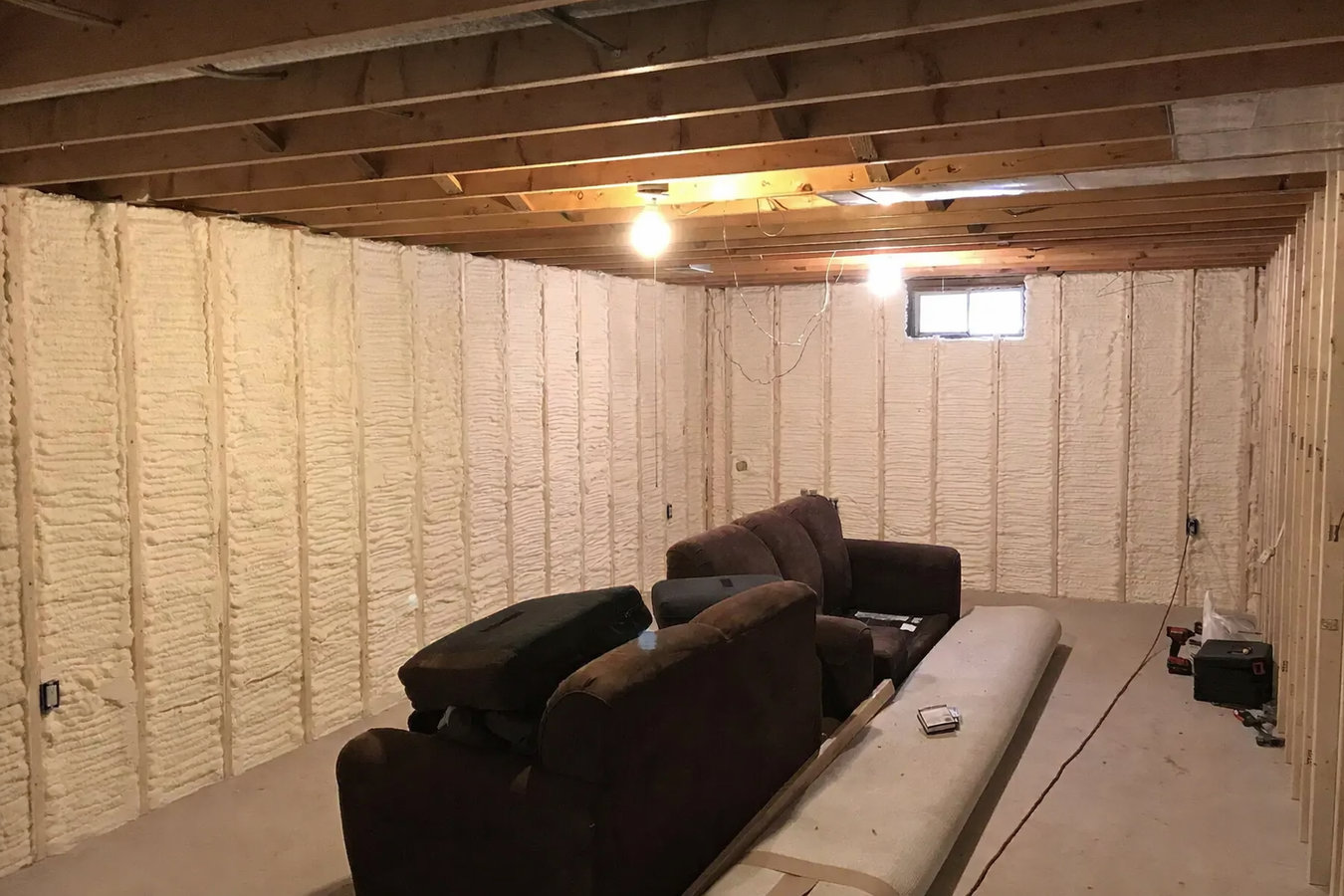
The right approach for your basement depends on whether it is finished or unfinished, how accessible the walls are, and whether you have any moisture history. For most unfinished Burlington basements, we insulate the rim joist area - where the floor framing meets the foundation wall - along with the interior face of the foundation walls themselves. Spray foam is our most common choice for rim joists because it both insulates and seals air gaps in a single step. For foundation walls, we may use rigid foam board, spray foam, or a combination, depending on the wall condition. We also pair closed-cell foam insulation with air sealing for basements that have significant moisture pressure from Burlington's clay soils and Lake Champlain proximity.
If your home has a crawl space in addition to a basement, we coordinate both in one project so you are not left with gaps in your home's thermal envelope. We also work alongside crawl space insulation teams to make sure the full below-grade envelope is treated consistently. Every job starts with a walkthrough that includes a moisture check - we do not insulate over problems, because that makes them worse.
Best for homes that need fast, high-impact air sealing where the floor framing meets the foundation.
Suited for unfinished basements where the goal is a warmer, drier space without a full finishing project.
Ideal for older Burlington homes with irregular stone or brick walls that need both insulation and air sealing.
A solid choice for poured concrete walls where the surface is even and a cost-effective solution is the priority.
Burlington averages around 155 days a year below freezing, and January lows regularly drop into the single digits. That kind of sustained cold puts enormous pressure on an under-insulated basement. Heat bleeds out constantly, your furnace works overtime to keep up, and the floors above stay cold no matter how high you set the thermostat. A large share of Burlington's housing stock dates from the early 1900s through the 1960s, when basement insulation was rarely installed at all. Many of those homes have stone or brick foundation walls that were never designed to hold insulation - which means the contractor you hire needs experience with irregular, older surfaces, not just modern poured concrete. We also see spring moisture issues regularly in Burlington because of the clay-heavy soils in many neighborhoods and the proximity to Lake Champlain. Installing insulation over a damp or seasonally wet wall traps that moisture and can lead to mold within a year or two - which is why our assessment process always includes a moisture check before anything goes in.
We serve homeowners throughout Burlington and into neighboring communities. Homeowners in South Burlington and Williston face the same cold-climate challenges and often deal with similar pre-1980 housing stock that was never properly insulated below grade.
We ask a few basic questions - basement size, whether it is finished or unfinished, and any water history. You will hear back within one business day, and we will schedule an in-home visit at a time that works for you.
We walk through your basement, check walls and rim joists, and look for signs of moisture or air leaks. You get a written estimate that explains what we recommend and why - with a clear price, before any work begins.
Move stored items two to three feet from the walls before the crew arrives. We handle the installation - spray foam, rigid board, or batts depending on your basement - and keep you informed throughout. Most jobs are done within one to two days.
We walk you through the finished job and show exactly what was installed and where. If your project qualifies for an Efficiency Vermont rebate, we help you understand the paperwork so that money does not stay on the table.
Free estimate. No pressure. We reply within one business day.
(802) 307-1480We assess every basement for moisture before recommending an approach - because insulating over a wet wall makes mold, not savings. If there is a water issue, we tell you before work starts, not after.
Stone and brick foundations common throughout Burlington's Old North End and Hill Section require different techniques than poured concrete. We have worked on dozens of homes from that era and know how to handle irregular surfaces correctly.
Vermont homeowners leave real money on the table every year by not claiming the rebates they qualify for. We walk you through what is available before the job starts so you know your actual out-of-pocket cost - not just the sticker price. Check current Efficiency Vermont rebates.
Every project starts with a written estimate that explains what we recommend and why. You know what you are paying for before we start, and the final invoice matches the quote - no surprise charges after the job is done.
Burlington basement insulation is not a simple commodity job - older homes here require careful assessment, the right method for the wall type, and attention to moisture before anything else. That is why homeowners in Burlington call us instead of calling whoever is cheapest.
For Vermont building code and permit questions, the Burlington Department of Planning and Zoning is the authoritative source. The U.S. Department of Energy publishes guidance on where to insulate and realistic energy savings estimates.
The highest-performing insulation per inch - particularly well suited for basement walls and rim joists where moisture resistance is a priority.
Learn moreIf your home has a crawl space alongside a basement, treating both below-grade spaces gives you a complete thermal envelope under your living area.
Learn moreFall slots fill fast - call today or request a free estimate online and we will get back to you within one business day.