Loading...
Serving Burlington, VT and surrounding areas. (802) 307-1480
Old or missing attic insulation is costing you money every Vermont winter. We fill gaps fast with cellulose or fiberglass - and help you qualify for Efficiency Vermont rebates.
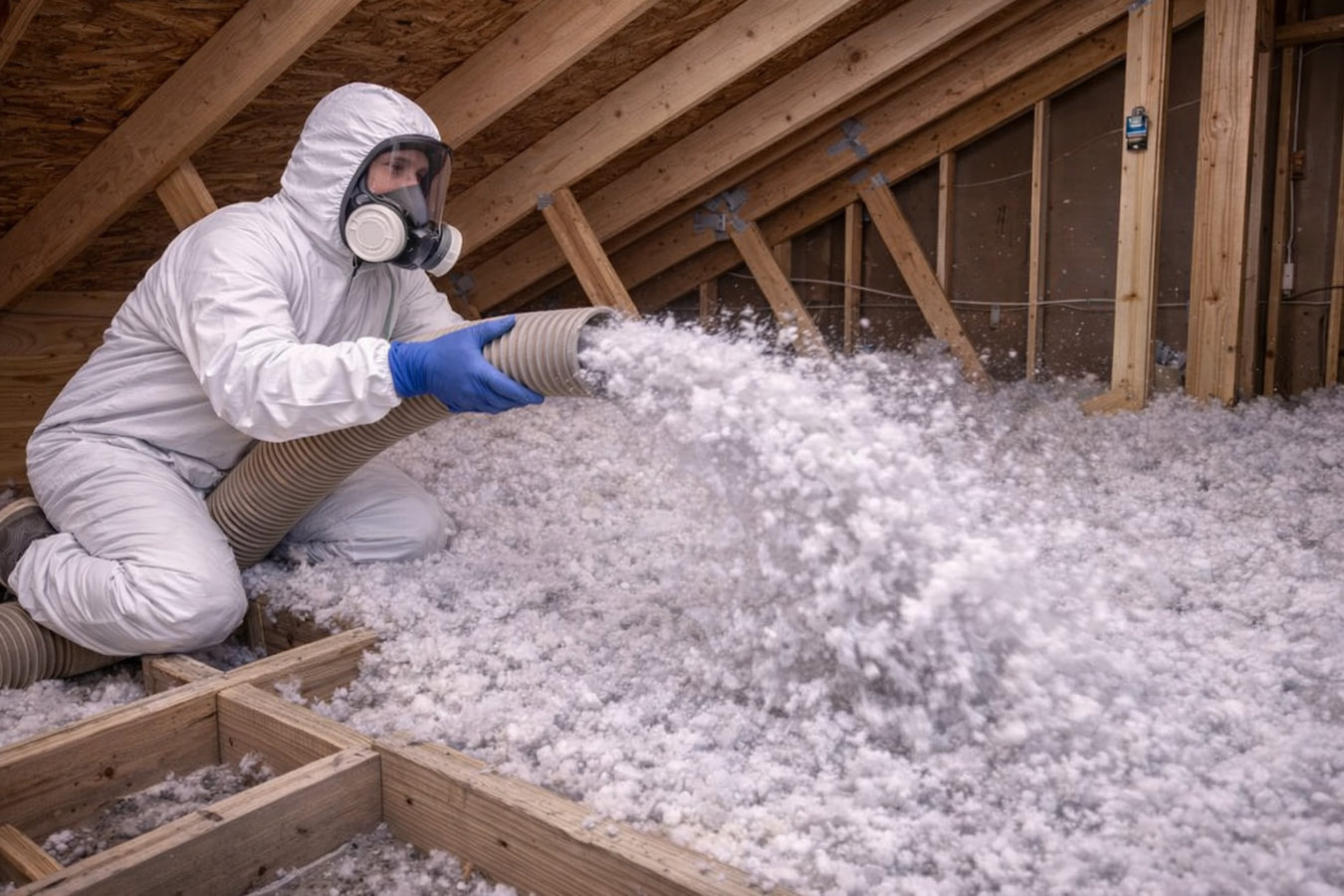
Blown-in insulation in Burlington fills your attic floor or wall cavities with loose cellulose insulation or fiberglass using a hose and blowing machine - most attic jobs finish in four to eight hours and your home is ready to use the same day. Vermont sits in Climate Zone 6, one of the coldest residential categories in the country, so getting to the recommended R-49 to R-60 in your attic is not a luxury - it is what separates a comfortable winter from a miserable one.
Burlington has a large share of homes built before 1980, many of which have thin or missing insulation in the attic and walls. If your heating bills creep up every November regardless of what you do, the attic is usually where the heat is escaping. Blown-in material fills irregular spaces and gaps that batt rolls or rigid board simply cannot reach - making it ideal for older wood-frame homes with odd framing. For attic work that also needs air leak attention, our attic air sealing service tackles both in one visit.
If your gas or electric bill spikes every November without any change in your habits, heat is almost certainly escaping through your attic. Burlington winters run from October through April, and an under-insulated attic means your furnace runs longer than it should every single day. The cost difference between a properly insulated attic and a thin one adds up fast over a six-month heating season.
Ice dams - thick ridges of ice that build up at the edge of your roof after a snowfall - are a classic warning sign in Burlington's older neighborhoods. They form when heat escaping through your attic melts roof snow, which then refreezes at the cold eaves. Left alone, they can force water under your shingles and cause interior water damage that costs far more than an insulation upgrade.
If one bedroom or corner of your home always feels cold no matter how high you set the thermostat, the ceiling or walls in that area likely have little or no insulation. In Burlington's older homes this is especially common in finished attic spaces or rooms above an unheated garage. You should not have to close off part of your home in January just to manage your heating bill.
Take a flashlight into your attic on a cold day. If you can see the joists poking through a thin layer of old material - or see daylight through gaps around pipes and fixtures - your attic is venting heat directly to the outside. Vermont's building energy standards call for significantly more depth than most Burlington homes currently have, especially those built before the 1980s.
Burlington Insulation Company installs blown-in insulation throughout Chittenden County and beyond. Our primary focus is attic work - blowing cellulose or fiberglass to Vermont's recommended depth over an existing attic floor - but we also handle dense-pack wall insulation for older homes where wall cavities were never filled. Every attic job starts with air sealing gaps around pipes, light fixtures, and the attic hatch before we blow in any material, because insulation over an unsealed attic delivers far less benefit than the same amount of material over a sealed one. If your whole house needs attention, see our home insulation page for a full overview of what a comprehensive upgrade looks like.
We also install blown-in material in finished walls using the dense-pack method, which involves drilling small holes in the siding or drywall to inject tightly packed cellulose insulation into the cavity. For homes where the walls have never been touched, this is one of the only ways to add meaningful insulation without a full renovation. If your project includes walls that are already exposed during a remodel, we can work alongside your general contractor to install wall insulation at the same time.
Best for Burlington homeowners with thin or missing attic insulation who want a fast, affordable upgrade without major construction.
Ideal for older homes with uninsulated wall cavities where tearing out drywall is not practical.
The most effective approach for homes that have both air leak problems and thin insulation - both issues tackled in one visit.
Burlington averages around 80 inches of snow a year and sits in Climate Zone 6, one of the most demanding residential heating environments in the continental United States. The recommended attic R-value for this zone is R-49 to R-60 - roughly 14 to 18 inches of blown-in material. Many Burlington homes, particularly the pre-1940 wood-frame houses in the Old North End and the Hill Section, have far less than that. Efficiency Vermont offers real rebates to help offset the cost, making Burlington one of the best places in the country to get this work done affordably. You can learn more about current rebate amounts at Efficiency Vermont.
Moisture is the other Burlington-specific concern. Older homes near Lake Champlain or in low-lying neighborhoods can have had moisture issues in the attic from ice dam damage, roof leaks, or inadequate ventilation. Blown-in insulation should never go in over wet or damaged material - so our first step is always an inspection, not a sales pitch. We also serve homeowners in South Burlington and Winooski, where many of the same pre-1980 housing conditions apply.
We respond within 1 business day. We will ask a few quick questions about your home age, which areas concern you, and whether you have had any insulation work before - just enough to make the in-home visit useful.
A technician visits your attic to measure current depth, check for moisture or mold, and identify air leaks around fixtures and the hatch. We quote after looking - not before - so you get an accurate number without any surprises.
The crew seals all identified air leaks first using foam and caulk, then blows in cellulose or fiberglass to the target depth. The blowing machine is loud - similar to a shop vacuum - but the work stays contained to the attic.
Before leaving, we confirm even coverage with depth markers and hand you a written record of the installed depth and R-value. This document is required for Efficiency Vermont rebate applications and protects you if your work is ever audited.
We respond within 1 business day - no obligation, no pressure. After you submit the form, someone from our office will call to schedule a free on-site estimate at a time that works for you.
(802) 307-1480We have worked in homes all across Chittenden County and the surrounding region. That local experience means we know what Burlington attics actually look like - from the cramped hip roofs on the Hill to the open rafters in South End ranches.
Most contractors skip air sealing because it adds time. We do it first on every attic job because insulation over an unsealed attic underperforms. The U.S. Department of Energy identifies air sealing as equally important to adding insulation thickness.
Burlington Insulation Company knows Vermont's Residential Building Energy Standards and builds every project to meet the state's performance requirements. Our experienced local crews handle each job start to finish, backed by a free written estimate up front.
When we finish, you get a written record of the installed depth and R-value achieved - not a verbal summary. This document is required for Efficiency Vermont rebate applications and protects you if your home is ever audited or sold.
These are not just credentials - they are the things that actually determine whether your blown in insulation performs the way it should. A good job done once lasts decades and saves real money every winter.
A whole-home insulation assessment that looks at attic, walls, basement, and crawl space together - the starting point if you have never had an upgrade done.
Learn moreDense-pack cellulose or fiberglass blown into existing wall cavities - the right next step after the attic is addressed in older Burlington homes.
Learn moreBurlington winters do not wait - the sooner your attic is sealed and insulated, the sooner you stop paying to heat the outdoors.