Loading...
Serving Burlington, VT and surrounding areas. (802) 307-1480
Burlington Insulation Company delivers home insulation, attic insulation, and spray foam services to South Burlington homeowners - with a one business day response time and free on-site estimates.
South Burlington's mix of 1950s-1970s ranches and newer Colonials means insulation needs vary widely by property. A whole-home home insulation assessment covers attic, walls, basement, and crawl space together, so you get a clear picture of where heat is actually being lost before committing to any single upgrade.
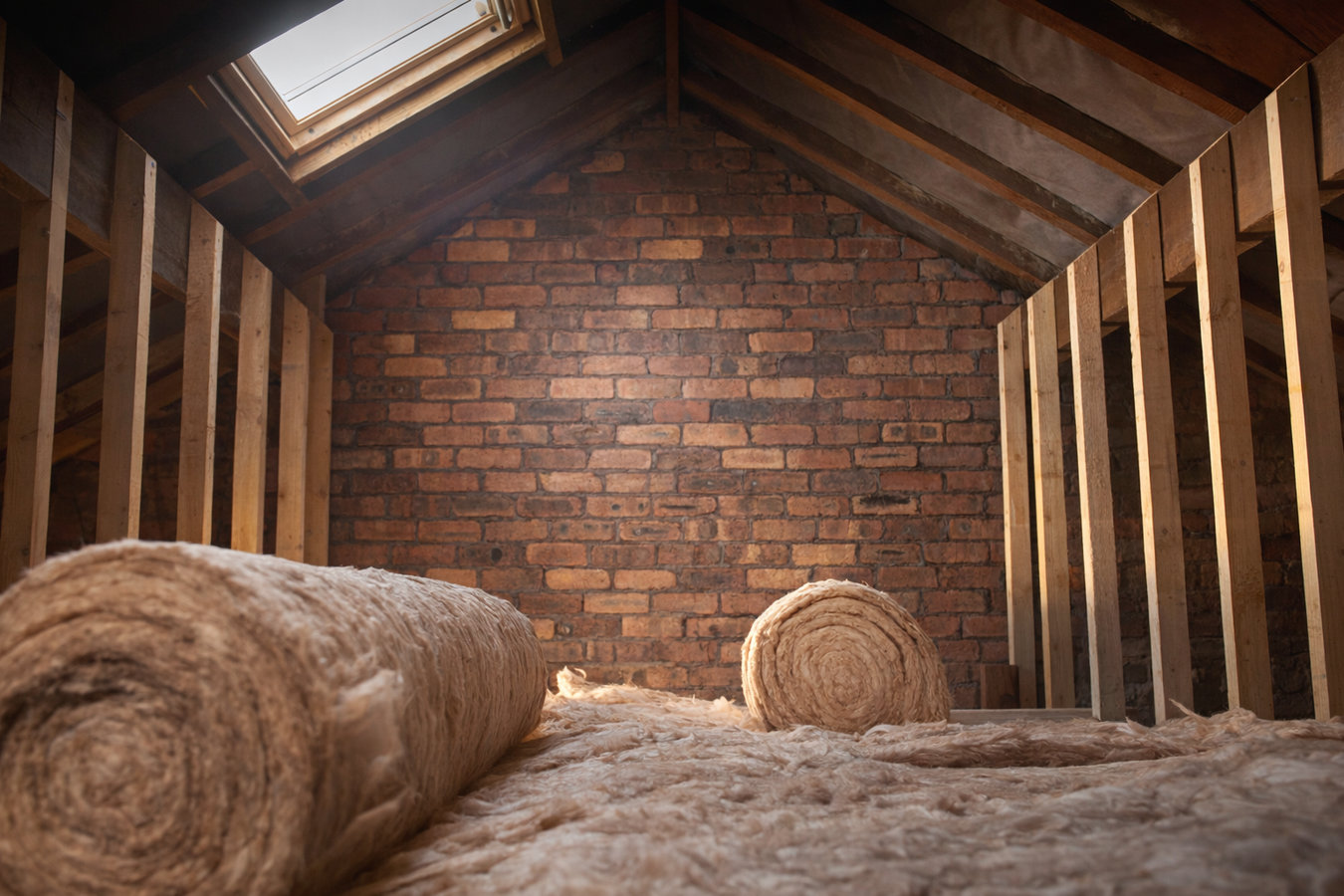
Ranch-style and split-level homes in South Burlington have low-pitched roofs with shallow attic spaces, which makes heat escape faster and creates ideal conditions for ice dam formation along the eaves every winter. Upgrading attic insulation in these homes is typically the highest-impact improvement for cutting heating bills and stopping ice dam damage.
Full basements are standard in South Burlington homes because Vermont's frost line runs deep - typically four feet or more. Many of the basements in postwar ranches and split-levels are partially finished and used as living space, making basement insulation as important for daily comfort as attic work, especially through the long heating season.
South Burlington homes from the 1960s and 1970s often have rim joists and band joists that were never insulated, creating a consistent cold-air entry point that batts cannot seal properly. Spray foam applied to these areas stops the infiltration that is often responsible for cold basement floors and drafty lower levels throughout the winter.
South Burlington's postwar housing stock frequently has unsealed gaps around plumbing penetrations, electrical boxes on exterior walls, and attic hatches that allow conditioned air to escape year-round. Professional air sealing, done before new insulation is installed, locks in efficiency gains that insulation alone cannot deliver.
Many South Burlington ranch homes have attic access hatches that are barely large enough for a person to fit through. Blown-in loose-fill insulation is the practical solution for these tight spaces because it fills every cavity evenly without requiring demolition, and it reaches corners and irregular joist bays that batts consistently miss.
The bulk of South Burlington's housing stock was built in the rapid postwar growth period from the 1950s through the 1970s. Ranch homes and split-levels from that era were constructed under energy standards that bear little resemblance to current Vermont requirements. Vermont sits in Climate Zone 6, one of the coldest residential categories recognized by the U.S. Department of Energy, and the recommended attic R-values for this zone are substantially higher than what most homes from that period received at construction. Combined with South Burlington's average snowfall of 70 to 80 inches per year and a frost line that goes down four feet or more, older homes here are working against their owners every single winter.
Low-pitched ranch roofs compound the ice dam problem. When heat escapes through a shallow attic, snow melts and runs only a short distance before hitting the cold eaves and refreezing. South Burlington also has areas of clay-heavy and compacted fill soils from postwar development that drain slowly, which means spring thaw routinely creates wet basement conditions in older homes with poured concrete or block foundations. Addressing both the thermal performance of the home and moisture barriers together is the approach that holds up through Vermont's seasonal swings.
We work throughout South Burlington, from the established neighborhoods off Williston Road and Shelburne Road to the newer subdivisions along Dorset Street and Hinesburg Road. The older neighborhoods closer to Burlington tend to have the postwar ranch and split-level homes that need the most attention from an insulation standpoint. The newer Colonials and contemporary homes in South Burlington's eastern neighborhoods built since the 1990s were constructed under better energy codes but often still benefit from air sealing and targeted upgrades as they reach the 30-year mark. South Burlington is served by the South Burlington Development Review Board for any permitted work, and we handle that paperwork on your behalf.
South Burlington borders Burlington directly to the west and shares a similar climate profile - same frost depth, same snow load, same freeze-thaw pattern in March and April that tests foundations and drainage systems. We serve homeowners across both cities, and if you are just inside the Burlington city line we serve that side too. We also serve homeowners in Winooski, which sits just north of Burlington and has its own distinct housing stock of older mill-era homes. Heading south from South Burlington, we also work regularly in Shelburne, where the housing stock shifts toward larger single-family homes on bigger lots.
We respond within one business day. When you reach out, we will ask about your home's age, type, and any specific concerns - enough context to make the in-home visit productive without an exhaustive questionnaire.
We visit your home, check the attic, basement, and any accessible wall cavities, and explain what we find in plain terms. We also identify whether your project qualifies for Efficiency Vermont rebates - so you know your real out-of-pocket cost before you make any decision.
If a permit is required through the South Burlington Development Review Board, we handle the application. Most standard insulation projects do not require one, but we confirm this for your specific job and take care of it if needed - adding only a few days to the start date.
Most jobs finish in one day. You can stay in your home during the work. Before the crew leaves, we walk you through what was done and handle any Efficiency Vermont rebate paperwork on your behalf.
We serve South Burlington neighborhoods from Williston Road to Dorset Street and everywhere in between. One business day response and a free on-site estimate with no obligation.
(802) 307-1480South Burlington is a city of about 20,000 people sitting directly east of Burlington, with its own city government, schools, and services. It grew rapidly after World War II as residents moved out of Burlington seeking newer homes and more space, and that growth wave left behind the ranch houses, split-levels, and Cape Cods that define the city's older neighborhoods. Williston Road (Route 2) and Shelburne Road (Route 7) are the two main commercial corridors, with residential neighborhoods spreading behind and between them. University Mall on Dorset Street is the main indoor shopping center for the broader Burlington area and a familiar landmark for South Burlington residents. Burlington International Airport sits entirely within South Burlington's city limits, making it one of the most visible features of the area.
South Burlington has a high rate of owner-occupancy and above-average household incomes for Vermont, which means most homeowners here have a long-term stake in maintaining their properties and the means to invest in upgrades that pay off over time. Many residents are employed at major regional employers like the University of Vermont Medical Center and nearby manufacturing and tech firms in Essex. Neighboring Winooski to the north and Shelburne to the south are both communities we serve regularly, each with housing types and insulation challenges distinct from South Burlington's postwar core.
Airtight spray foam insulation that seals gaps and maximizes energy efficiency.
Learn moreProper attic insulation to prevent heat loss and reduce energy bills year-round.
Learn moreBlown-in loose-fill insulation that fills every cavity for complete coverage.
Learn moreSafe removal of old, damaged, or contaminated insulation from any space.
Learn moreCrawl space insulation to stop moisture intrusion and improve home comfort.
Learn moreInterior and exterior wall insulation for better thermal and sound performance.
Learn moreProfessional air sealing to eliminate drafts and boost HVAC efficiency.
Learn moreBasement insulation that controls moisture and keeps lower levels comfortable.
Learn moreHigh-density closed-cell foam with superior R-value and moisture resistance.
Learn moreCost-effective open-cell foam for sound dampening and thermal insulation.
Learn moreCommercial-grade insulation for offices, warehouses, and industrial facilities.
Learn moreHeavy-duty vapor barriers that protect crawl spaces from moisture damage.
Learn moreExpert vapor barrier installation to prevent condensation and mold growth.
Learn moreTargeted attic air sealing to stop conditioned air from escaping overhead.
Learn moreServing these cities and communities.
Whether your home is a postwar ranch off Williston Road or a newer Colonial near Dorset Street, the right insulation makes every Vermont winter more manageable. Call us or submit a request and we will respond within one business day.