Loading...
Serving Burlington, VT and surrounding areas. (802) 307-1480
Burlington Insulation Company provides basement insulation, spray foam, and attic insulation throughout Barre, VT - serving the granite-era homes of Barre City and the postwar ranches of Barre Town with a one business day response time.
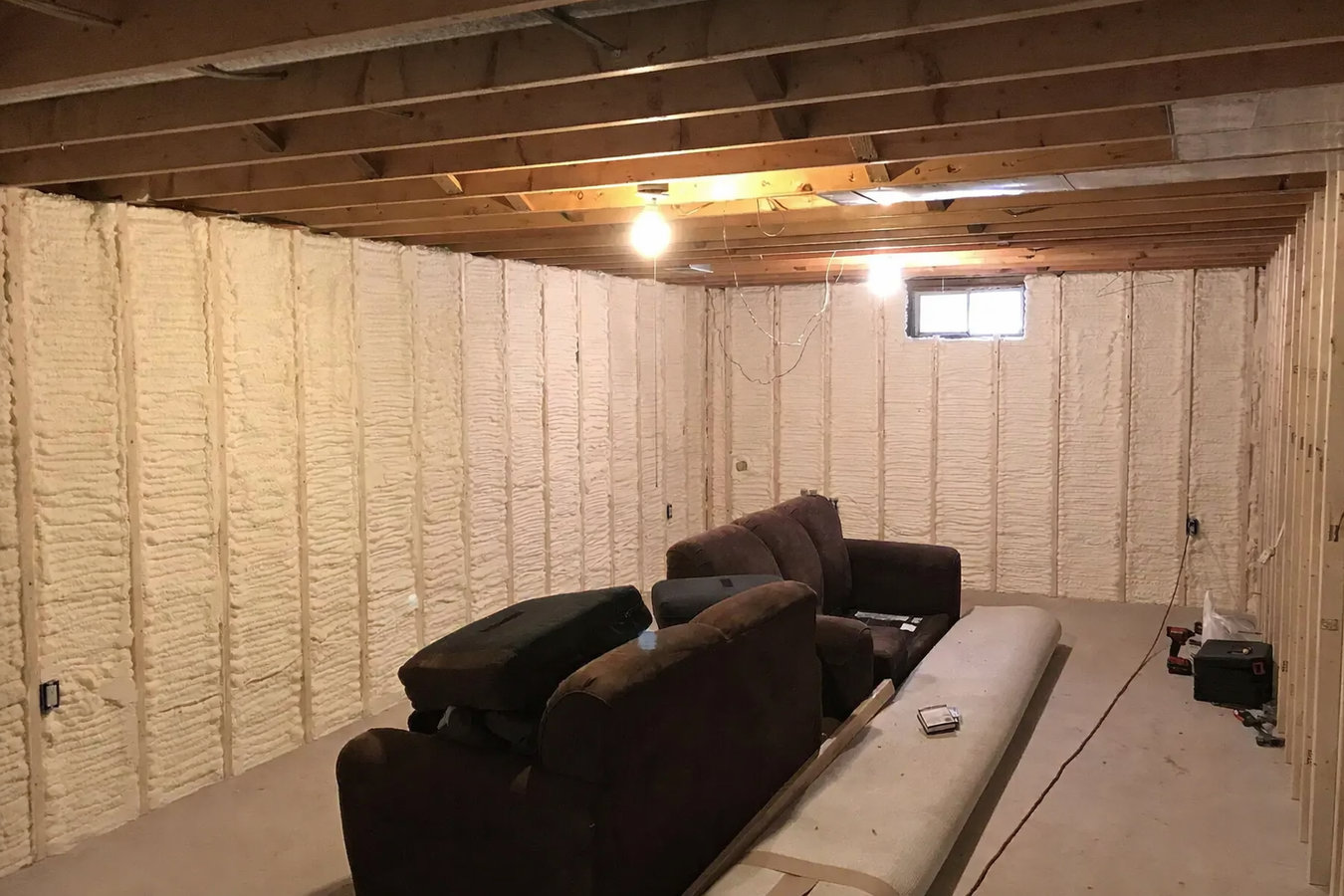
Barre was built by granite workers, and a large share of homes in the city have granite block or rubble stone foundations that were never designed for modern insulation. Our basement insulation work accounts for those irregular surfaces - using spray foam that conforms to the stone face and seals moisture paths at the same time, so the result actually performs and does not trap water behind the material.
Barre's freeze-thaw winters open gaps in wood framing year after year, and older homes in the city have had decades to accumulate air paths that standard insulation cannot address. Closed-cell spray foam applied at rim joists, band joists, and around penetrations stops both heat loss and the cold air infiltration that makes Barre homes feel drafty even with the heat running.
Barre averages around 80 inches of snow per year, and attics with inadequate depth are the primary cause of ice dams on the steep-roofed homes throughout the city. Adding insulation to the right depth for Vermont's climate zone stops the heat escape that drives ice dam formation and reduces what you pay to heat the living space below each winter.
The two- and three-story wood-frame homes packed along Barre's hillside streets have had a century of settling, shifting, and small gaps opening throughout the building envelope. Air sealing targets those gaps at the attic floor and basement rim joist - the two locations that account for most heat loss in older New England construction - before any new insulation goes in.
Some of the older properties in Barre City, particularly those on the steeper hillside lots, have partial crawl spaces rather than full basements. An uninsulated crawl space in a Vermont winter pulls cold air directly into the floor system above, making ground-floor rooms uncomfortable and forcing the heating system to run harder to compensate.
Pre-1940 homes in Barre sometimes have original insulation that has absorbed decades of moisture from stone foundations and spring flooding. Installing new material over a wet, compressed, or contaminated layer wastes the investment. Removing the old material first means the new insulation starts from a clean surface and performs at its rated value from day one.
Barre City is one of the oldest settled urban areas in central Vermont, and the housing stock reflects that history. A large share of homes in the city were built between the 1880s and 1930s, when granite workers flooded into the area and two- and three-story wood-frame houses went up quickly on narrow lots along steep hillside streets. These homes were built before modern building codes, before vapor barriers, and before anyone thought about thermal performance as an engineering goal. The result is a housing stock that leaks heat from every surface - walls, attics, and especially the basement, where granite block foundations that were built to last have also become the primary route for cold air and moisture to enter the home every winter.
The climate in central Vermont is demanding. Barre averages around 80 inches of snow per year and sees temperatures drop well below zero in January and February. That kind of sustained cold, combined with the freeze-thaw cycling that happens dozens of times each winter and into early spring, puts constant stress on older foundations, driveways, and building envelopes. Spring snowmelt along the Stevens Branch river causes wet basements and flooded crawl spaces in the lower sections of the city - a problem that has been part of life in Barre for generations. Homes that handle these conditions without major damage are the ones where the building envelope has been properly insulated and sealed.
We work on homes throughout Barre City and Barre Town, and the two are genuinely different jobs. In Barre City, we regularly encounter granite block and rubble stone foundations - the kind of walls that came out of the same quarries that built the city - on two-story wood-frame homes sitting on narrow lots where there is sometimes no more than three feet between houses. Tight access, irregular foundation surfaces, and older framing that has moved over a century of Vermont winters are the standard in the city core. We pull permits through Barre City when the scope requires it and know where that line is before starting any job.
Main Street in downtown Barre runs through a valley surrounded by the hillside neighborhoods where most of the older residential properties sit. We know those streets - North Main, Seminary Street, the blocks around Hope Cemetery, and the denser blocks close to the Barre Opera House. Barre Town is a different story - newer ranch homes and split-levels on larger lots, postwar construction that has its own insulation needs but generally has better foundation access than the in-city properties.
Barre sits about 8 miles from Vermont's state capital, and we serve homeowners across the whole corridor. Our nearby work in Montpelier deals with similar older housing stock - pre-war wood-frame homes with stone foundations and decades of deferred insulation upgrades. We also serve homeowners in St. Albans, which has its own older building stock in a climate that pushes the same insulation priorities.
Reach out by phone or through the contact form and we will respond within one business day. We will ask about your home's age, what part of Barre you are in - city or town - and what has you calling, whether that is a high heating bill, a wet basement, or something you noticed during the winter.
We walk through your basement, attic, and any crawl spaces, check the foundation type, look for moisture evidence, and measure what is there versus what is needed. For Barre City homes, this step takes longer than in newer construction because older buildings have more variables. You get a written estimate that explains what we found and why we are recommending what we are - not a one-line quote.
Most basement insulation jobs in Barre are completed in one to two days. You clear items away from the walls and we handle the rest. If spray foam is going in, the space is off-limits while it cures - typically a few hours - and we will let you know exactly when you can go back in. Attic work is usually a single day and does not require you to leave the house.
When the job is done, we walk you through what was installed, point out anything we noticed during the work, and leave the space clean. If your project qualifies for an Efficiency Vermont rebate - which many basement insulation jobs in Barre do - we will tell you what documentation you need and how to submit it so the money does not go unclaimed.
We serve Barre City and Barre Town. One business day response. No-pressure estimate, written and explained before anything starts.
(802) 307-1480Barre calls itself the Granite Capital of the World, and the title is earned. The city grew rapidly in the late 1800s as granite workers - many of them Italian and Scottish immigrants - poured into the area to work the quarries and sheds. The Rock of Ages quarry in nearby Graniteville is still one of the largest deep-hole granite quarries in North America, and the industry remains part of the local economy today. The result of that history is a compact city of about 9,000 people in Washington County - dense, walkable, with a downtown valley surrounded by steep hillside residential streets packed with pre-1940 wood-frame homes. Granite shows up everywhere: in foundations, steps, curbing, and the elaborate monuments at Hope Cemetery, which draws visitors from around the country to see what the city's craftsmen built.
Barre City and Barre Town are two separate municipalities that sit side by side - the city is the older, denser urban core, while the town surrounds it with more suburban and rural residential areas that grew out from the 1960s through the 1990s. Homeowners in both see a mix of housing ages and types, from Victorian-era two-stories in the city to ranch homes and Cape Cods out in the town. The city sits just 8 miles southeast of Vermont's capital, and the corridor between Barre and Montpelier is one we know well. We also serve homeowners further north toward St. Albans, where older housing stock and demanding winters create the same set of insulation priorities.
Airtight spray foam insulation that seals gaps and maximizes energy efficiency.
Learn moreProper attic insulation to prevent heat loss and reduce energy bills year-round.
Learn moreBlown-in loose-fill insulation that fills every cavity for complete coverage.
Learn moreSafe removal of old, damaged, or contaminated insulation from any space.
Learn moreCrawl space insulation to stop moisture intrusion and improve home comfort.
Learn moreInterior and exterior wall insulation for better thermal and sound performance.
Learn moreProfessional air sealing to eliminate drafts and boost HVAC efficiency.
Learn moreBasement insulation that controls moisture and keeps lower levels comfortable.
Learn moreHigh-density closed-cell foam with superior R-value and moisture resistance.
Learn moreCost-effective open-cell foam for sound dampening and thermal insulation.
Learn moreCommercial-grade insulation for offices, warehouses, and industrial facilities.
Learn moreHeavy-duty vapor barriers that protect crawl spaces from moisture damage.
Learn moreExpert vapor barrier installation to prevent condensation and mold growth.
Learn moreTargeted attic air sealing to stop conditioned air from escaping overhead.
Learn moreServing these cities and communities.
Granite foundations, old wood frames, and 80 inches of snow every winter require a contractor who knows the difference. Call us or get a free estimate online.