Loading...
Serving Burlington, VT and surrounding areas. (802) 307-1480
Burlington Insulation Company provides spray foam, attic insulation, and home insulation services throughout Williston, VT - serving homes from the village center to the Taft Corners subdivisions with a response time of one business day or less.
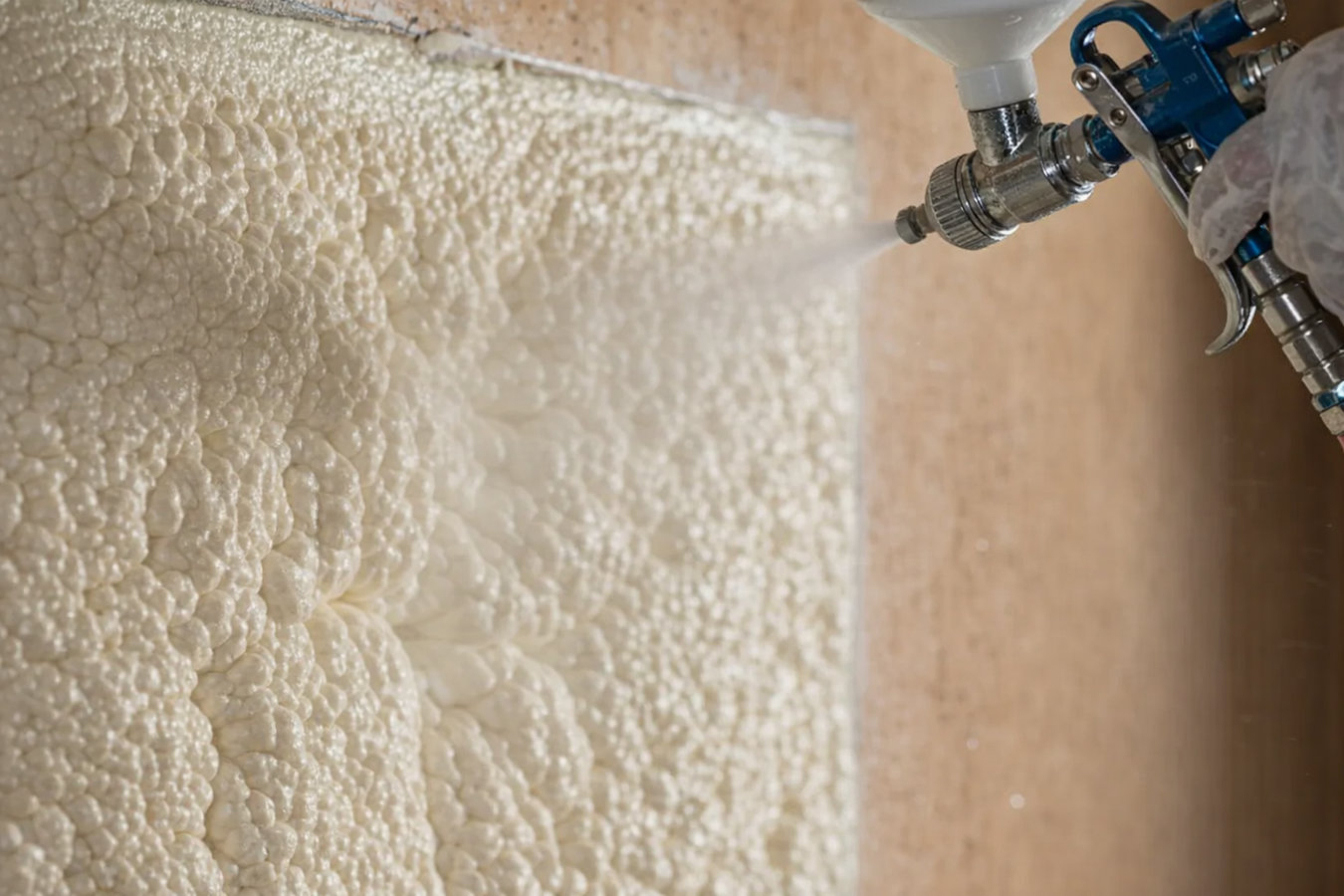
The newer subdivisions near Taft Corners and the I-89 corridor were built fast, and rim joists and band joists in those homes are often under-sealed. Our spray foam insulation work addresses those gaps directly - sealing air leaks and adding insulation in one application, which is the most efficient upgrade for a 1990s colonial or split-level.
Williston attics from the 1990s build-out were typically filled to the code minimum at the time - not to the depths Vermont winters actually demand. After 25 to 35 years, that blown-in material has settled further, and the gap between what is there and what is needed is now large enough to show up on your heating bill every January.
In Williston homes built between 1985 and 2005, the framing is tight but the penetrations - plumbing chases, recessed lights, and electrical runs - were rarely sealed before insulation went in. Air sealing those paths before adding new material means the upgrade actually performs the way it is rated, rather than losing efficiency to hidden drafts.
Williston gets ground frost several feet deep every winter, and uninsulated basement walls and rim joists let that cold work straight into your living space. Insulating the basement perimeter is especially valuable in the cape cod and colonial homes near the village center, where basements tend to be unfinished and uninsulated.
Blown-in cellulose or fiberglass is the most practical way to top off attic insulation in occupied Williston homes - it goes in through a hose with minimal disruption and fills odd-shaped bays and corners that batts cannot cover. It is also the most cost-effective option when you need to add depth to material that has settled over the years.
Williston sits about 10 miles east of Burlington in Chittenden County, and it shares the same brutal Vermont winters - ground frost that can reach several feet deep, average snowfall around 70 to 80 inches per year, and January nights that regularly drop below zero. What makes Williston different from older Vermont towns is that most of its homes were built between 1985 and 2010. That construction era used insulation levels that were adequate for energy codes at the time, but those codes have changed significantly. A house built in 1995 that has never been upgraded is almost certainly under-insulated by current Vermont standards, even though it may look perfectly well-maintained from the outside.
The town also has two distinct housing types that behave differently in winter. The older homes near Williston Village - many dating to the early 1900s - have the drafts and thin walls you expect from older construction. The newer subdivisions near Taft Corners and the I-89 interchange look modern but have their own insulation problems: rim joists left unsealed during fast construction, minimal basement wall insulation, and attic depths that were borderline even when installed. Mud season adds another layer - saturated ground around foundations every spring is a real moisture risk for any home where the crawl space or basement insulation has not been addressed.
We pull permits through the Williston Development Review Board and have worked on homes across the town - from the older cape cods and colonials near the town green to the newer vinyl-sided subdivisions that grew up around the Taft Corners commercial corridor in the 1990s and 2000s. One thing that comes up regularly in Williston is homes where the attic was partially insulated during a previous renovation but the rim joists and band joists were never touched. That combination - added attic depth but unsealed lower perimeter - is one of the most common sources of heat loss we find in houses off Route 2.
The I-89 Exit 12 interchange is the main gateway into Williston, and the neighborhoods that developed around it in the late 1980s through the 2000s are now all hitting the age where insulation and air sealing upgrades make real financial sense. We also serve homeowners in Essex Junction, which sits just north of Williston and shares a similar mix of 1950s-to-1980s housing stock, and in Shelburne, which is just south.
We respond within one business day. We will ask a few basic questions - your home's age, which areas concern you, and whether you have noticed ice dams or high heating bills - so the in-home visit is productive from the start.
We visit your Williston home and check the attic, rim joists, basement walls, and any areas you flagged. We explain what we find before recommending anything, and we identify any Efficiency Vermont rebates your project qualifies for so you know your actual cost before committing.
Most attic and blown-in jobs take one day and do not require you to leave your home. Spray foam projects require the home to be unoccupied during application and for about 24 hours afterward while the foam cures - your crew will give you a specific re-entry time before work begins.
After the work is done, we walk you through what was installed and confirm coverage. If your project qualifies for Efficiency Vermont rebates, we provide the documentation you need to submit the claim - or handle it on your behalf if we are a registered partner for your project type.
We serve Williston, VT and surrounding Chittenden County towns. Reach us by phone or fill out our contact form - we respond within one business day.
(802) 307-1480Williston is one of the fastest-growing towns in Vermont, with a population that has more than doubled since 1980 and now sits around 10,000 residents. The town has two distinct identities. The original village center near the town green is quiet and historic, with older homes on larger lots and the feel of a classic Vermont community. The commercial corridor along Route 2 near the I-89 interchange - anchored by the Taft Corners shopping area - is one of the most heavily developed commercial strips in Chittenden County, surrounded by residential subdivisions built out during the 1990s and 2000s.
Most Williston homes are owner-occupied, and median home values rank among the higher ones in Chittenden County. Residents here tend to invest in their properties. The housing stock ranges from 19th-century farmhouses and early cape cods near the village to vinyl-sided colonials and split-levels that went up during the suburban build-out along the Route 2 corridor. We also serve nearby Shelburne to the south and Winooski to the northwest, both of which share Williston's proximity to Burlington.
Airtight spray foam insulation that seals gaps and maximizes energy efficiency.
Learn moreProper attic insulation to prevent heat loss and reduce energy bills year-round.
Learn moreBlown-in loose-fill insulation that fills every cavity for complete coverage.
Learn moreSafe removal of old, damaged, or contaminated insulation from any space.
Learn moreCrawl space insulation to stop moisture intrusion and improve home comfort.
Learn moreInterior and exterior wall insulation for better thermal and sound performance.
Learn moreProfessional air sealing to eliminate drafts and boost HVAC efficiency.
Learn moreBasement insulation that controls moisture and keeps lower levels comfortable.
Learn moreHigh-density closed-cell foam with superior R-value and moisture resistance.
Learn moreCost-effective open-cell foam for sound dampening and thermal insulation.
Learn moreCommercial-grade insulation for offices, warehouses, and industrial facilities.
Learn moreHeavy-duty vapor barriers that protect crawl spaces from moisture damage.
Learn moreExpert vapor barrier installation to prevent condensation and mold growth.
Learn moreTargeted attic air sealing to stop conditioned air from escaping overhead.
Learn moreServing these cities and communities.
Call Burlington Insulation Company at (802) 307-1480 or get a free estimate online. We respond within one business day.