Loading...
Serving Burlington, VT and surrounding areas. (802) 307-1480
If your floors are cold all winter and your heating bills do not match the size of your home, the crawl space is usually where the problem starts. We insulate and seal it properly so you feel the difference from the first cold snap.
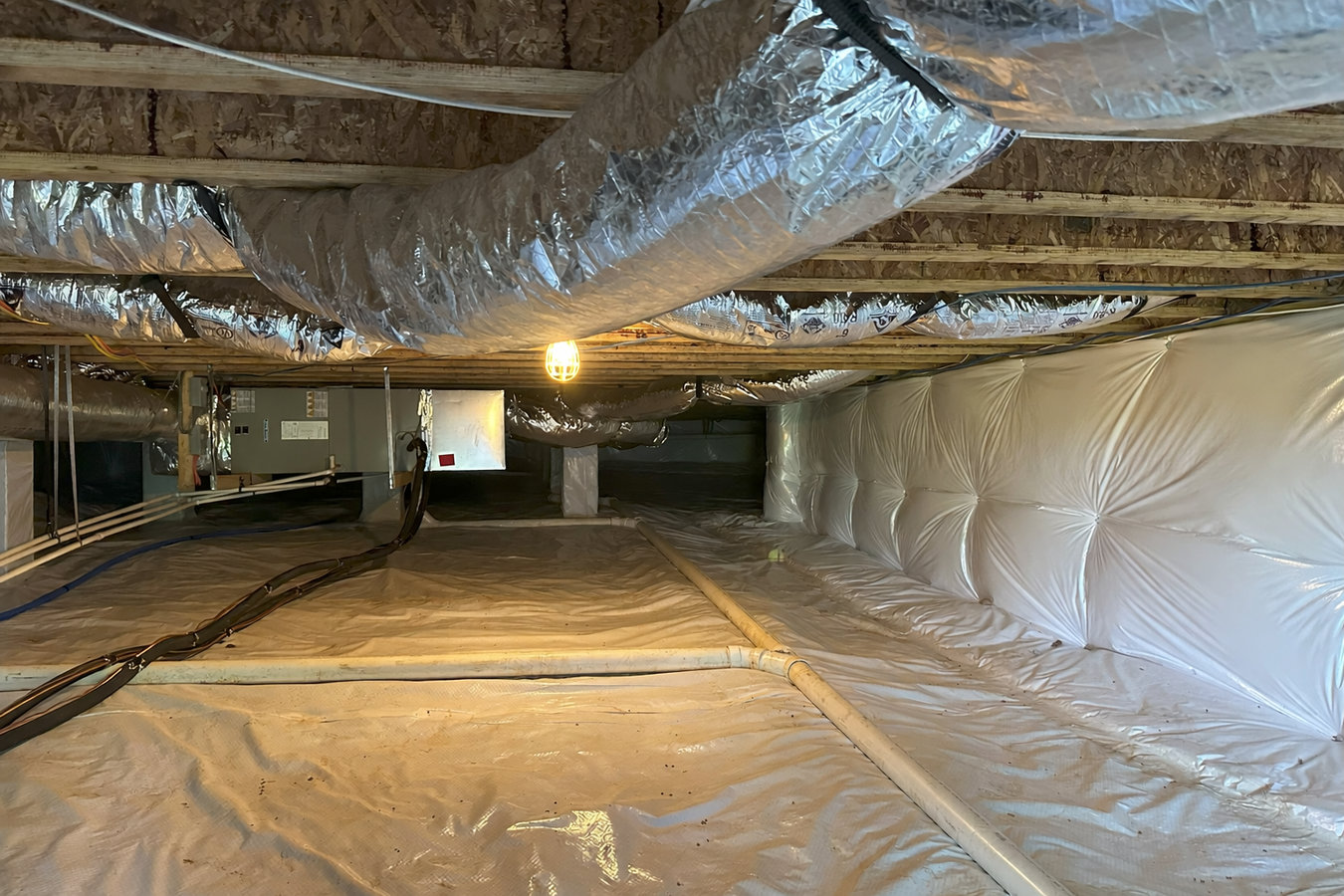
Crawl space insulation in Burlington acts as a thermal blanket between the cold ground and your living floors - most jobs for a standard home are completed in one to two days. Without it, cold air and ground moisture move upward through your floor joists, making rooms directly above the crawl space uncomfortable and your furnace work harder than it should.
A thorough crawl space job involves more than just packing in insulation. Moisture control is the other half of the equation. A properly installed vapor barrier on the ground stops ground moisture from rising into the insulation and framing above. Many Burlington homeowners also find that crawl space work pairs naturally with a crawl space vapor barrier installation - treating both problems at the same time rather than addressing moisture later as a separate project.
If you walk across your kitchen or living room in January and the floor feels cold through your socks, that is a strong sign cold air from below is getting through. In Burlington, where temperatures regularly drop into the single digits, an uninsulated or failing crawl space can make the floors directly above feel almost as cold as outside.
Burlington's winters are cold enough that pipes running through an uninsulated crawl space are genuinely at risk. If you have ever had a pipe freeze, heard unusual sounds during a cold snap, or had a plumber warn you about vulnerable pipes, your crawl space insulation is likely inadequate. Proper insulation keeps the space warm enough to protect plumbing through even the coldest Vermont nights.
A musty or earthy odor that seems to come from the lower level of your home - particularly noticeable after a wet spring - often points to moisture building up in the crawl space. Burlington's wet springs and the freeze-thaw cycle that follows winter can push a lot of moisture into an unprotected crawl space, and that moisture leads to mold on wood framing.
If you have ever peeked into your crawl space and seen insulation drooping from the floor joists, patches of bare wood, or any sign of water pooling on the ground, those are clear signals the space needs attention. Homes in Burlington's older neighborhoods built before the 1970s frequently have crawl spaces that were never properly insulated or sealed.
We handle both the floor-joist approach - insulating between the joists above the crawl space - and full crawl space encapsulation, which seals and insulates the foundation walls and treats the whole space as part of your home's thermal envelope. The encapsulation approach keeps pipes and ductwork inside the warm zone and tends to perform better in Vermont's climate. We also install crawl space vapor barriers as part of every encapsulation job and as a standalone service when moisture is the primary concern.
For crawl spaces where old or damaged insulation needs to come out first, we coordinate removal and new installation as a single project - there is no need to hire a separate contractor for each step. We also treat air sealing and insulation as one job, sealing around pipes, wires, and beams where they pass through the floor so that cold air does not find a way in regardless of how much insulation is installed. Homeowners who want to understand their home's full thermal envelope often start with our wall insulation service alongside crawl space work.
Best for homeowners who want to improve comfort quickly with a straightforward re-insulation of the floor above the crawl space.
Ideal for Burlington homes with serious moisture, frozen pipe history, or where the goal is to bring the crawl space fully inside the home's thermal envelope.
Suited for homeowners dealing with ground moisture, musty smells, or high humidity in the crawl space - often combined with new insulation for complete protection.
For Burlington homes where sagging, wet, or pest-damaged insulation needs to come out before anything new goes in.
Burlington averages around 60 inches of snow per year and regularly sees temperatures drop well below zero in January and February. That kind of cold puts real pressure on an uninsulated crawl space - which is why frozen pipes and ice-cold floors are such common complaints here. Much of Burlington's residential housing stock dates from the early to mid-20th century, and many of those homes were built with little or no crawl space insulation. This is especially common in the Hill Section and the Old North End, where older housing is concentrated and crawl spaces are often cramped and irregularly shaped. Vermont's combination of cold winters and wet springs also means moisture management is not optional - contractors in this region know that skipping the vapor barrier step is a shortcut that leads to mold and failed insulation within just a few years. The Building Performance Institute certifies contractors in building science, and BPI-certified crews understand Vermont's specific climate challenges, not just how to install materials.
We serve homeowners throughout the greater Burlington area. Homeowners in Essex Junction and Milton frequently call us about the same issue - cold floors and elevated heating bills in older homes where the crawl space has never been properly addressed.
We ask a few questions about your home - size, moisture history, any pipe or comfort issues - and schedule an in-person visit. You will hear back within one business day.
We physically enter the crawl space, check existing insulation, measure the space, and look for moisture, mold, or pest activity. This visit takes 30 to 60 minutes and we explain everything we found before we leave.
You receive a written estimate outlining the scope, materials, and total cost. If you are comparing multiple quotes, confirm each one covers vapor barrier, air sealing, and insulation - so you are comparing equivalent proposals.
On the work day, we remove any old material, install the vapor barrier and new insulation, and walk you through the finished space - with photos if access is limited - so you can see the result firsthand.
Free estimate, no obligation. We come to your home, look at the crawl space, and give you a clear written quote before any work begins.
(802) 307-1480We work in Burlington and across the surrounding towns - from the city's older neighborhoods to the newer suburbs. That breadth means we understand the range of crawl space conditions in this area, from stone-foundation homes in the Old North End to postwar ranches with low-clearance spaces in the South End.
We do not treat vapor barriers and insulation as optional add-ons. In Vermont's climate, skipping the moisture control step is a shortcut that leads to failed insulation within a few years. Every crawl space project we quote includes a full assessment of moisture conditions and a recommendation that actually addresses them.
Vermont homeowners can offset a meaningful portion of the project cost through Efficiency Vermont rebates - but the paperwork has to be right. We are familiar with the program requirements and can help you understand what you qualify for before the job starts.
We show you what we found in the crawl space, explain what we are going to do and why, and walk you through the finished work when it is done. You should never feel like you are handing over a check and hoping for the best - particularly for work happening in a space most homeowners rarely see.
The crawl space is one of the most overlooked parts of a home - and one of the most impactful when it comes to comfort and energy costs. We treat it with the same care and documentation as any visible part of the job.
Extend your home's thermal protection to the exterior walls - a natural next step after addressing the crawl space for homeowners who want to reduce heating costs across the whole house.
Learn moreA heavy-duty ground cover that blocks moisture from rising out of the soil - the foundation of any crawl space encapsulation project in Vermont's wet climate.
Learn moreGetting this done before heating season means warmer floors, protected pipes, and lower bills from day one - do not wait until the cold is already inside your home.