Loading...
Serving Burlington, VT and surrounding areas. (802) 307-1480
Fiberglass batts leave gaps that spray foam fills completely. Open-cell foam expands into every crack and corner, sealing the air leaks that drive up heating bills and cause ice dams on Burlington rooftops every winter.
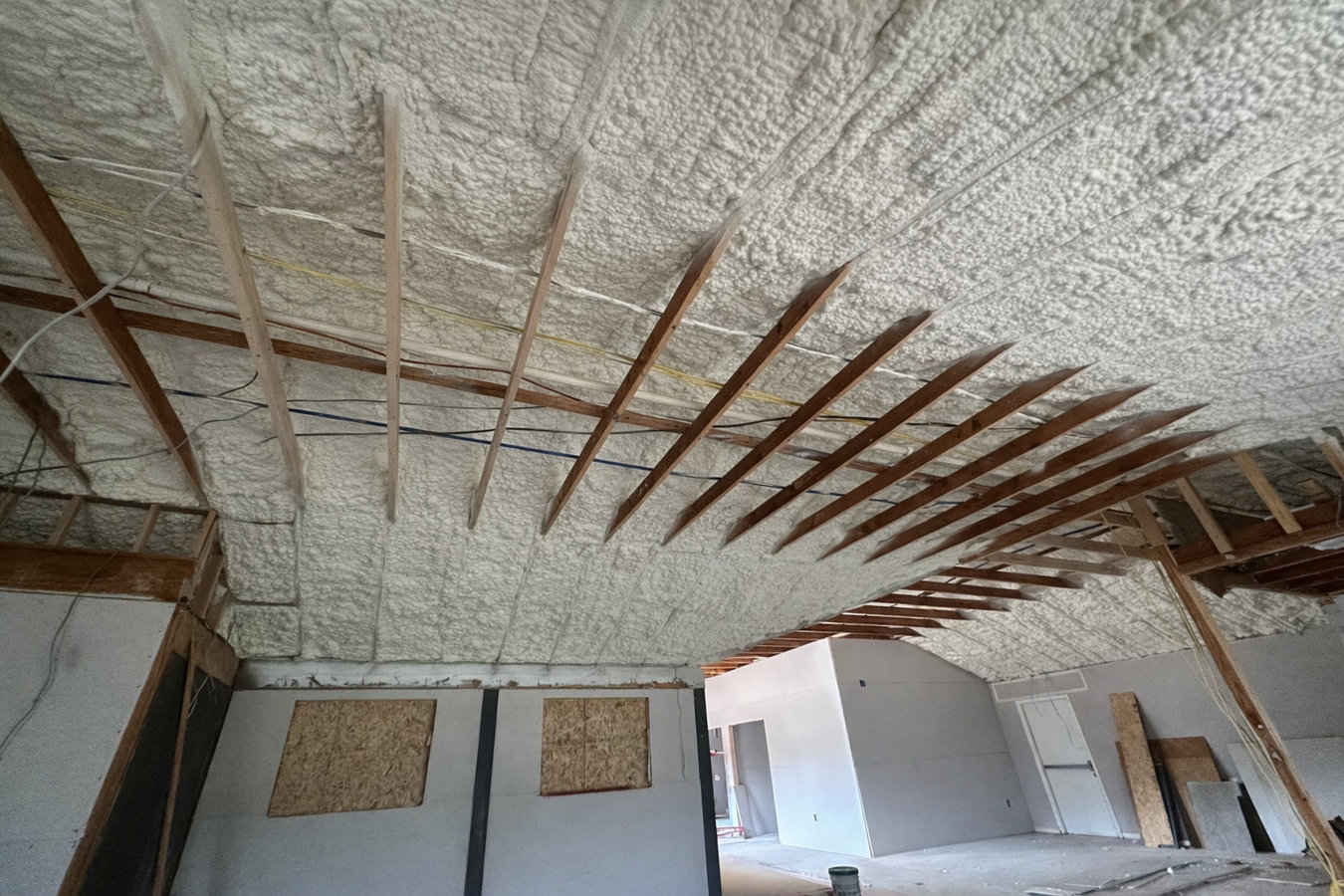
Open-cell foam insulation in Burlington is sprayed as a liquid that expands immediately to fill every gap and crack in your attic, walls, or basement rim joists - most residential jobs take four to eight hours and are complete in a single day. It gets its name from the tiny open bubbles inside the foam that make it flexible and slightly breathable, which is an advantage in older homes where wood framing moves with the seasons.
Unlike fiberglass batts that sit in cavities and leave gaps at the edges, spray foam expands on contact and bonds directly to framing - sealing the air leaks that batts simply cannot reach. That air-sealing effect is often more important for comfort and energy bills than the insulation value alone, because most of the cold air entering a Burlington home sneaks in through gaps rather than pushing through the walls. If you are also weighing spray foam insulation options for your home, open-cell foam is generally the more cost-effective choice for interior applications like attic floors and wall cavities.
If your gas or electric bills have crept up over the past few winters but your usage habits have not changed, air leaking through your attic, walls, or basement rim joists is a likely culprit. Burlington's long heating season - often six months or more - means even a modest air leak compounds into a significant cost over time. A home that is losing heat through gaps rather than through the walls themselves is a strong candidate for spray foam.
Cold air pooling near baseboards or drafts you feel when walking across an upper floor are classic signs of air infiltration. In Burlington's older housing stock - especially wood-framed homes built before the 1960s - the rim joist sitting on top of your foundation is often completely uninsulated and full of gaps. Open-cell foam applied to that rim joist area can eliminate those drafts in a single afternoon.
If you can see the tops of your attic floor joists poking up through the insulation, or if it looks matted and less than about 10 inches deep, it is likely underperforming. Vermont's energy requirements for attics are among the most demanding in the country, and older homes rarely meet them. Spray foam on the attic floor or underside of the roof deck can bring an older home up to a performance level that makes a real difference through winter.
Ice dams - ridges of ice that build up at the edge of your roof and sometimes back water up under your shingles - are almost always a sign that warm air is escaping from your living space into the attic and melting snow unevenly. Burlington homeowners deal with this regularly, and it is one of the most visible signs that your attic insulation and air sealing are not doing their job. Properly installed spray foam can dramatically reduce or eliminate ice dams.
We spray open-cell foam in the areas that deliver the most value for Burlington homes: attic floors, basement rim joists, interior wall cavities during renovations, and around plumbing and electrical penetrations. For each job, we mask off surfaces that should stay foam-free, spray the material in controlled passes until the target thickness is reached, and trim the cured foam flush with the framing before we leave - so you can inspect the work before we close anything up. We also offer commercial insulation for business properties across Burlington and the surrounding region, using the same spray foam methods that work so well in residential settings.
Vermont homeowners who complete a qualifying insulation upgrade may be eligible for rebates through Efficiency Vermont, and some projects also qualify for federal tax credits. We know the process and can help you understand what documentation you need before and after the job. Because installation requires temperatures above roughly 40 degrees to cure correctly, we recommend scheduling in late spring through early fall - Burlington's reliable installation window runs May through October.
Best for homes with ice dam problems or high heating bills - seals the attic floor and stops warm air from escaping into the roof space.
Best for older Burlington homes with cold first floors - spray foam seals the band of wood on top of your foundation where air infiltration is common.
Best for renovation projects where walls are open - fills irregular cavities around old wiring and plumbing that batts cannot fully cover.
Best for cathedral ceilings and bonus rooms over garages - applied to the underside of the roof deck to create a fully conditioned, sealed attic space.
Burlington averages around 60 inches of snow per year and regularly sees temperatures drop well below zero - placing it in one of the coldest climate zones in the continental United States. A large share of Burlington's housing stock dates from the late 1800s through the mid-20th century, particularly in the Hill Section, the Old North End, and the South End. Homes built in those eras have little or no wall insulation, and framing gaps have widened over decades of freeze-thaw cycles. Open-cell foam is especially well-suited to these older structures because it can be sprayed into irregular cavities and around old wiring or plumbing that a rigid board or batt simply cannot fit around. The Spray Polyurethane Foam Alliance notes that properly installed open-cell foam can last the lifetime of the building without losing meaningful performance - making it a one-time investment for most homeowners.
We serve homeowners throughout greater Burlington and the surrounding communities. Homeowners in Winooski and Shelburne deal with the same cold winters and older housing stock as Burlington proper. If you have been putting off insulation work because you were not sure it was worth the cost, talking to a contractor who knows this market is the most useful first step.
We reply within one business day. We will ask a few basic questions - what area you want insulated and whether you have noticed specific problems like drafts or high bills - so we can come prepared for the site visit with no surprises on either side.
We walk through the areas you want insulated, measure the space, check for obstacles like old wiring or existing insulation, and give you a written estimate that breaks down the area being treated and the target foam thickness. No guesses, no phone quotes.
If your project triggers Burlington's building permit requirements - for example as part of a basement finish or roof renovation - we handle pulling the permit before work begins. Spring and summer book up quickly, so expect to schedule a few weeks out during peak season.
The crew arrives, masks off the work area, and sprays the foam in passes until the target thickness is reached. Once cured, we trim it flush and walk through the completed work with you before closing anything up. If a permit was pulled, a city inspector verifies the work meets Vermont's energy code.
Free estimate. No pressure. We reply within one business day.
(802) 307-1480Most of the homes we insulate in Burlington were built before 1960, with irregular framing, old plumbing, and gaps that newer products cannot reach. We understand what these homes need and how to fill them correctly the first time.
Vermont is one of the few states with a statewide energy efficiency utility offering direct rebates to homeowners. We know the Efficiency Vermont process and help you access available rebates and document the work correctly for your claim.
We coordinate the required permits so Burlington's building inspectors can independently verify the job - giving you a second set of eyes on the quality of the work, not just our word for it.
From Burlington to South Burlington, Winooski, Shelburne, and beyond, we have installed open-cell foam in homes across Chittenden County. Local contractors with local knowledge deliver better results than out-of-area crews unfamiliar with Vermont's climate and building code.
Open-cell foam is one of the most effective upgrades a Burlington homeowner can make for a cold Vermont home. Working with a contractor who knows the local market means fewer surprises and better long-term results - call us or submit a request online and we will get back to you within one business day.
Insulation for Burlington offices, retail spaces, and commercial buildings - reducing heating costs and meeting Vermont's commercial energy code requirements.
Learn moreThe full range of spray foam options for Burlington homes - including both open-cell and closed-cell applications matched to each area of your home.
Learn moreBurlington's installation season is short - reach out now and lock in your spot before summer books up.